
Last updated: September 6, 2026
Regulatory Disclaimer: This guide provides educational consumer insurance analysis for drivers across the United States, Canada, and the United Kingdom. It does not replace formal legal counsel or personalized insurance underwriting advice. State financial responsibility statutes, minimum liability mandates, and cancellation protocols vary by jurisdiction. Always verify your current policy endorsements and lien releases directly with your insurer and your regional motor vehicle agency before modifying active coverage.
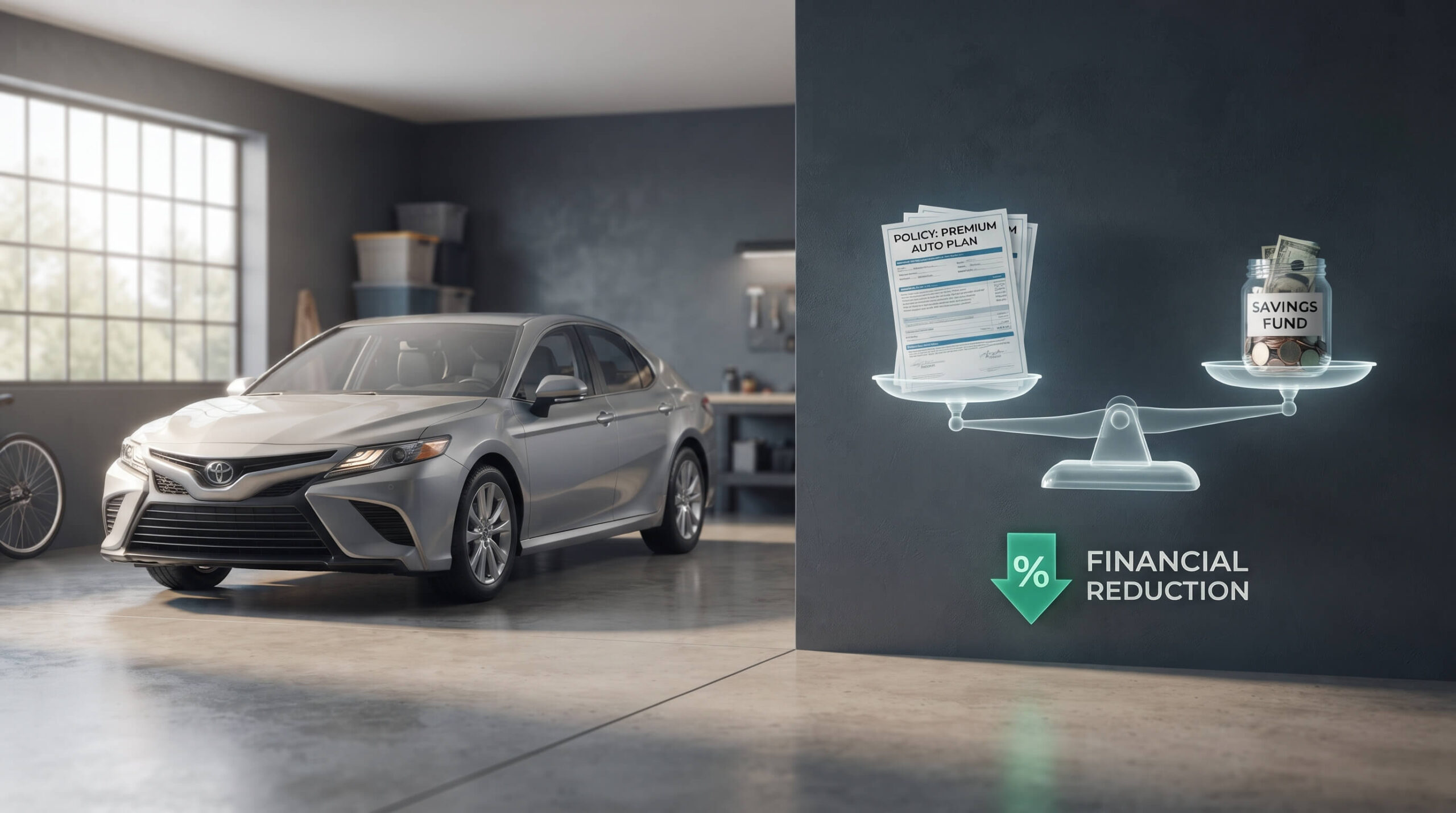
You should drop full coverage when your annual physical damage premium exceeds 10% of your car’s actual replacement payout. Knowing when to drop full coverage on an older car comes down to basic math: comprehensive and collision endorsements never pay out more than your car’s market value minus your deductible.
Once vehicle depreciation reduces that net claim check to less than a few years of premium payments, carrying full physical protection wastes your cash. Shifting to liability coverage protects your personal assets while stopping unnecessary premium leakages on older automobiles.
The Mechanical Split: Comprehensive vs Collision on Older Vehicle Coverage
Understanding your policy begins with separating state-mandated coverage from optional physical protection. Every state requires baseline liability insurance to cover third-party damage you cause to other motorists.
In contrast, comprehensive vs collision on older vehicle coverage safeguards your own property. Collision pays for crash damage involving other vehicles or stationary objects. Comprehensive covers non-collision losses such as theft, hail, vandalism, falling objects, and animal impacts.
| Insurance Endorsement | What It Covers | Is It Legally Required? | Typical Payout Ceiling |
| Bodily Injury Liability | Third-party medical bills and legal defense | Yes (in almost all jurisdictions) | Policy limit caps selected by driver |
| Property Damage Liability | Damage you cause to another person’s car/property | Yes (mandated by state statute) | Policy limit caps selected by driver |
| Collision Coverage | Impact damage to your vehicle regardless of fault | Only required by active lienholders | Actual Cash Value (ACV) minus deductible |
| Comprehensive Coverage | Non-collision incidents (theft, fire, glass, weather) | Only required by active lienholders | Actual Cash Value (ACV) minus deductible |
When you eliminate physical damage protection, your baseline liability stays completely intact. Your legal driving status does not change.
Mathematical Reality: Car Insurance Actual Cash Value vs Deductible
Insurers settle total loss claims based on Actual Cash Value (ACV), not your original purchase price. Comparing your car insurance actual cash value vs deductible reveals how low your potential claim check really is.
Total Loss Payout Formula:
[ Vehicle Actual Cash Value (ACV) ] - [ Selected Deductible ] = Net Claim Payout Check
If your vehicle carries a private resale value of $3,500 and your collision deductible sits at $1,000, the maximum indemnity payment you can collect following a severe accident is $2,500.
If the combined comprehensive and collision portion of your premium costs $800 annually, you are spending roughly one-third of the vehicle’s net payout every twelve months. In three years, you have paid the insurer more in premiums than they would ever return after a complete wreck.
The Decision Metric: The 10 Percent Rule Car Insurance Formula
Actuaries and consumer advocates rely on a specific financial benchmark: the 10 percent rule car insurance formula. This guideline indicates when is full coverage no longer worth it on a balance-sheet basis.
Applying the 10 Percent Benchmark
- Step 1: Determine your car’s true replacement value using verified market guides like Kelley Blue Book or Edmunds.
- Step 2: Subtract your comprehensive and collision deductibles from that value.
- Step 3: Calculate 10% of that remaining net balance.
- Step 4: Review your insurance declarations page to isolate what you pay exclusively for collision and comprehensive endorsements.
- Step 5: If your annual physical damage premium exceeds that 10% figure, discontinue those endorsements.
Example Calculation:
• Market Value: $4,000
• Deductible: $1,000
• Net Insurable Value: $3,000
• 10% Decision Threshold: $300 per year
Result: If full coverage costs more than $300/year ($25/month), drop it.
Applying this guideline ensures you never buy coverage that costs more than the asset is mathematically worth.
Cost Savings: How Much Do You Save Dropping Full Coverage?
State premium indexes indicate that physical damage coverage accounts for 30% to 50% of an average auto insurance bill. Calculating how much do you save dropping full coverage shows immediate, recurring cash-flow relief.
Drivers directing these freed-up funds toward a dedicated emergency account create self-insurance reserves rapidly. Combining this strategy with an auto loan refinance cuts monthly transportation costs even further.
| Vehicle Valuation Tier | Average Annual Full Premium Range | Average Liability-Only Premium Range | Estimated Annual Cash Savings |
| Low Value ($2,000 – $3,500) | $1,200 to $1,650 [confirm with insurer] | $550 to $750 | $650 to $900 annually |
| Mid-Older Value ($4,000 – $6,000) | $1,400 to $1,850 [confirm with insurer] | $600 to $850 | $800 to $1,000 annually |
| Upper Tier ($7,000 – $9,000) | $1,650 to $2,100 [confirm with insurer] | $650 to $950 | $1,000 to $1,150 annually |
Note: Individual rates vary depending on geographic territory, driving history, and state loss metrics.
Actionable Roadmap: Safe Transition to Liability Only Insurance for Paid Off Car
Eliminating coverage without verifying your legal obligations can trigger fines or loan defaults. When switching to liability only insurance for paid off car status, complete these 5 steps in exact sequence:
- Confirm Clear Title and Lien Status: Verify that your vehicle title has zero active financial liens recorded with your state motor vehicle registry.
- Audit Liquid Cash Reserves: Confirm you have sufficient personal savings to replace transportation or handle minor body repairs out of pocket.
- Price Higher Liability Thresholds: Reallocate a small fraction of your premium savings into buying higher third-party bodily injury and property damage limits.
- Notify Your Existing Carrier: Request the formal removal of comprehensive and collision coverages while retaining uninsured motorist and liability protections.
- Establish an Automated Sinking Fund: Route your monthly insurance savings directly into a high-yield account to fund your future vehicle purchase.
Legal Requirements and Verification Standards
Lenders mandate full coverage through contract clauses to protect their collateral. You cannot drop collision coverage while a loan or lease remains active.
Once your loan balance reaches zero, state departments of motor vehicles only regulate liability coverage. For instance, the New York State Department of Motor Vehicles strictly mandates statutory liability and uninsured motorist limits, but leaves physical vehicle damage coverage entirely optional.
Drivers should review state minimum requirements periodically. Coupling proper liability limits with strategies from our credit union banking guide keeps personal savings shielded against catastrophic third-party civil judgments.
Expert Policy Advice: Never reduce your liability limits to state minimums just to save a few extra dollars. Lowering physical damage protection on your own older car makes sense; lowering your liability protection exposes your future wages and personal bank accounts to third-party lawsuits.
Transition Checklist: Dropping Collision Insurance Older Car Checklist
Run through this dropping collision insurance older car checklist before calling your insurance representative:
- Official title document in hand showing no active bank or credit union lienholder.
- Market valuation printout from at least two reputable pricing databases documenting current local private-party sales.
- Liquid savings balance of at least $1,500 to $2,500 set aside to address unexpected mechanical or collision repairs.
- Review of your daily commute routes, parking risk profile (street parking vs. locked private garage), and annual mileage.
- Confirmation that roadside assistance and towing endorsements remain active on your baseline liability policy.
Comparing Options: Keep Full Coverage vs Drop Collision Only vs Drop Both
Drivers do not always face an all-or-nothing choice. Insurers allow policyholders to split physical damage coverages depending on distinct risk exposures.
| Strategy Path | Coverage Kept | Pros | Cons | Best Scenario |
| Maintain Full Coverage | Liability + Collision + Comprehensive | Complete repair guarantee; zero out-of-pocket repair risk | Highest annual cost; diminishing returns on older cars | Vehicles valued over $6,000 with low deductibles |
| Drop Collision / Keep Comprehensive | Liability + Comprehensive | Protects against theft, glass, deer, and storms cheaply | At-fault crash damage must be paid entirely out of pocket | Rural areas with high deer strike rates or street parking |
| Liability-Only Transition | Bodily Injury + Property Damage | Maximum premium savings; lowest possible ongoing cost | All vehicle damage to your own car is self-insured | Vehicles valued under $4,000 with clear titles |
Dropping collision while retaining comprehensive is an effective middle ground. Comprehensive coverage typically costs a fraction of collision premiums while shielding older cars from theft, vandalism, and weather disasters.
Frequently Asked Questions
Will dropping full coverage cause my insurance rates to increase later?
No. Voluntarily dropping comprehensive and collision coverages does not create a lapse in insurance coverage. As long as you maintain continuous state-mandated liability insurance, your insurance score and underwriting tier remain favorable.
What happens if an uninsured driver hits my older car?
If you hold liability-only coverage without physical damage protection, your insurer will not repair your car unless you carry specific Uninsured Motorist Property Damage (UMPD) coverage. In states where UMPD is available, adding it provides low-cost property protection against hit-and-run or uninsured motorists without requiring costly collision coverage.
Can I drop full coverage if I still owe money on my auto loan?
No. Your financing contract legally obligates you to maintain comprehensive and collision insurance until the lien is satisfied. Dropping full coverage while carrying a loan balance triggers lender-placed insurance, which is substantially more expensive and protects only the lender’s interest.
Strategic Summary
Carrying full insurance coverage on a low-value vehicle transfers wealth from your family to an insurance carrier. Run your numbers through the 10 percent rule, pull your current vehicle market valuation, and verify your title lien status. Removing obsolete physical damage coverage lowers your monthly fixed expenses, allowing you to build emergency reserves and maintain genuine control over your transportation budget.
Editorial & Compliance Details
- Written by: The Cover Global News Insurance Editorial Team
- Compliance Review: Reviewed for accuracy against US state financial responsibility laws, state DMV insurance verification protocols, and NAIC consumer guidelines.
